
Mary Awkard Fairfax Exhibit
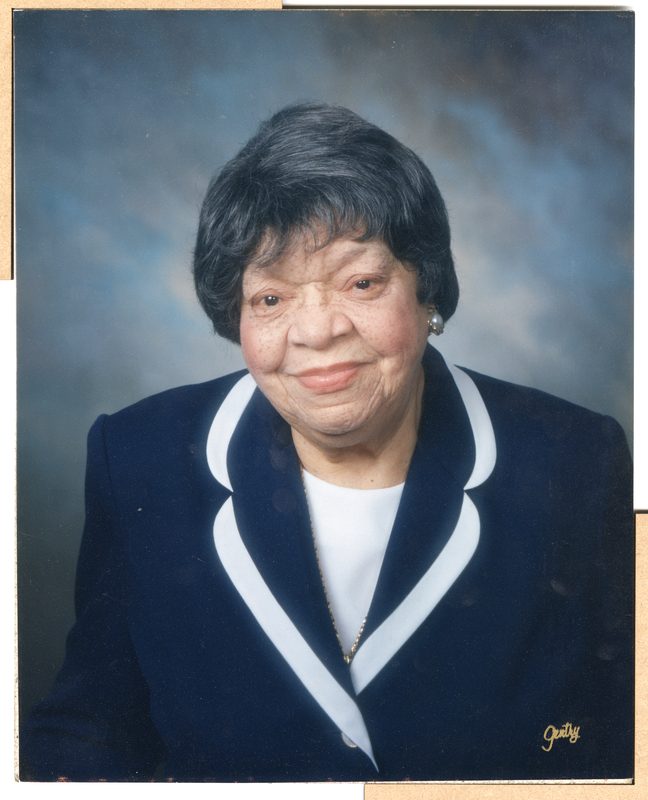
The Legacy Continues
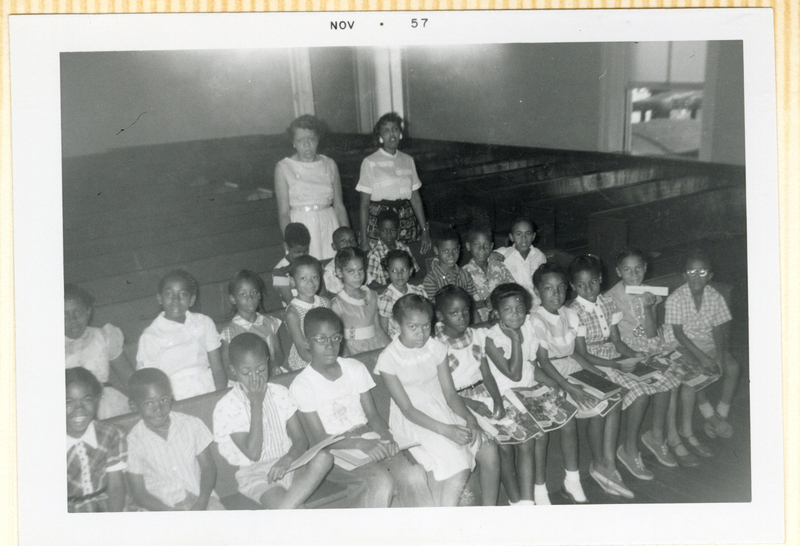
You are standing in the classroom of Mary Awkard Fairfax, who taught at the Lucy F. Simms School from 1942 to 1966. A former student of Lucy F. Simms, Mrs. Fairfax was one of her most prominent successors in the Northeast community.
Miss Simms and Mrs. Fairfax both taught multiple generations of students and are widely remembered as "community mothers." They attended to the needs of the whole child and understood that the schools they ran were not just places of learning, but were both an extension of the home and a core gathering place for the community.
This expansion of the "Celebrating Simms" exhibit honors the life of Mary Awkard Fairfax and acknowledges her profound impact. The exhibit has been built from hundreds of family photographs, oral history and documentary footage, and memories. Many thanks to Mrs. Fairfax's family, former students, members of the Northeast Neighborhood community, and Virginia Humanities for making this exhibit possible.
"Pay attention, cause I'm gonna give you everything that I've got to give."
- Mary Awkard Fairfax
Mary's Early Years
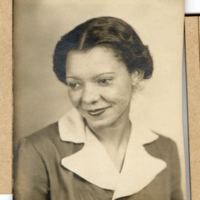
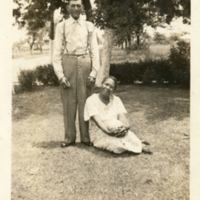
Mary Awkard Fairfax was born on Effinger Street in Harrisonburg in 1912. When she was nine years old, her father built a new home on Broad Street, where they lived for many years. At that time in Harrisonburg, few homes had running water or electricity, and few families had cars. And yet, as she described her childhood, "nobody was unhappy. Nobody was quarrelling."
Mary was the oldest child of Joseph and Mary Nanline Awkard. Nanline worked as a seamstress and had a passion for music. Joe was a master carpenter. Years later, when the city bought and destroyed much of the neighborhood in the name of "Urban Renewal," Mary returned the city's check for her family home. "I said you all are not going to have my home because my daddy built it. And I said it's not for sale."
As a child, Mary and her siblings walked every day to Effinger Street School, where they studied with incredible teachers such as Roberta Webb, W.N.P. Harris, and Lucy F. Simms. Her favorite subjects were History, English, and Latin. At the end of each day, she went straight home to do chores and look after her siblings. When asked what she used to do for fun, she said, "Our parents were so strict, there wasn't too much fun you did!"
"[Miss] Fairfax went into teaching because of her family, which placed great value on education."
- Mary Ann Smith-Tucker, niece
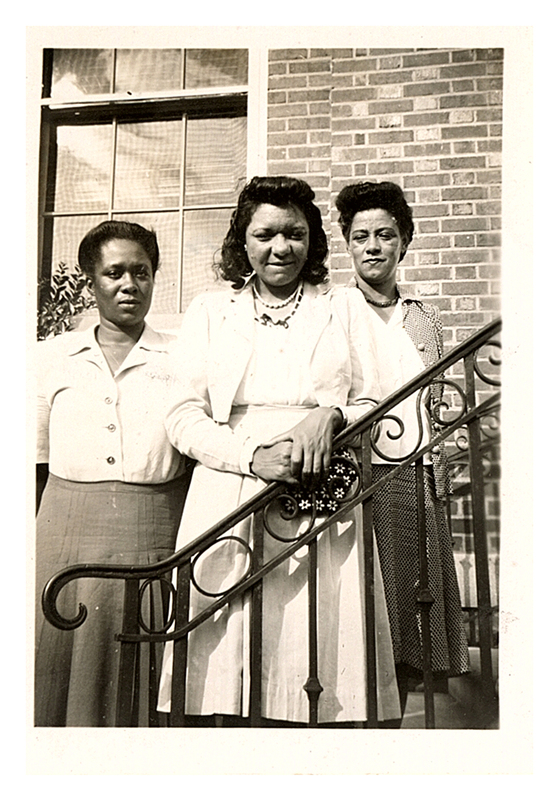
A Love of Learning
In 1930, only a few months after graduation, Mary was recruited by William H. Keister, the Superintendent of the Harrisonburg school system, to teach in a new one-room school for Black students in New Market. The school was falling apart, and Mary told them that she would only teach if it were properly supplied. Soon, the school had new floors, a new blackboard, and a new stove, and Mary got a two-year teaching permit and moved in with a local family so that she could start right away.
After two years in New Market, Mary decided to pursue a teaching certificate at Virginia State College, working odd jobs to pay her way through the program. During practice teaching sessions, her classmates asked how she managed to command such control of her classrooms. "I taught in a one-room school when I was eighteen years old," she told them. She graduated with honors in 1934.
While teaching, Mary continued her studies in the summers. She earned her Bachelor's Degree from Virginia State College in the 1940s and became one of the only teachers in Harrisonburg to hold a Master's Degree in Early Childhood Education, which she earned from Columbia University in 1956. Because she was not one to "brag on what she had," Miss Fairfax's colleagues at Waterman Elementary were unaware of her degree until the topic came up one day at the soda machine. "I have it," she casually told them. Her colleagues' reactions spoke volumes: "You could have heard two pins drop!"
"My parents said: I don't know how you're going to school... I said: I know Momma, but I want to go so I can be a teacher."
- Mary Awkard Fairfax
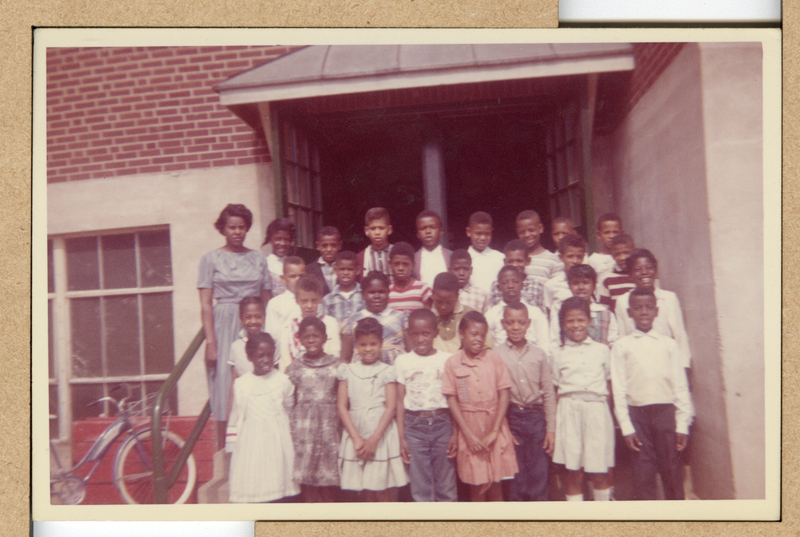
Miss Awkard at Simms
After New Market, Mary Awkard taught in Staunton and Bridgewater before coming to teach at the Lucy F. Simms School in 1942. She served as the second-grade teacher at Simms for 24 years.
Although supplies were hard to come by, Miss Awkard was always resourceful in how she managed her classroom. She bought second-hand books, put students in learning groups, and used best practice journals like "The Normal Instructor" to craft lessons. Corliss Brown remembers that when you arrived in her class, "you got your own desk and knew you were moving up. You knew you were going to learn."
Miss Awkard cared deeply for her students, seeing them in some ways as her own, and often spending her own money to get "a little something" for them. More than anything, she encouraged her students' creativity. The operettas, Doll Theatre, and annual May Day celebrations that she orchestrated ensured that the Simms School was both a place of rigorous learning and a center of culture and joy for the neighborhood. Her niece, Mary Ann Smith-Tucker, says that her aunt considered her investment in her students a lifelong endeavor. "To many people, she would say, 'Are you doing your best? Are you in school?' She followed through."
"She did what she could to help us. Always kind. Very seldom did she have to get strict with us."
- Donna Brock, former student
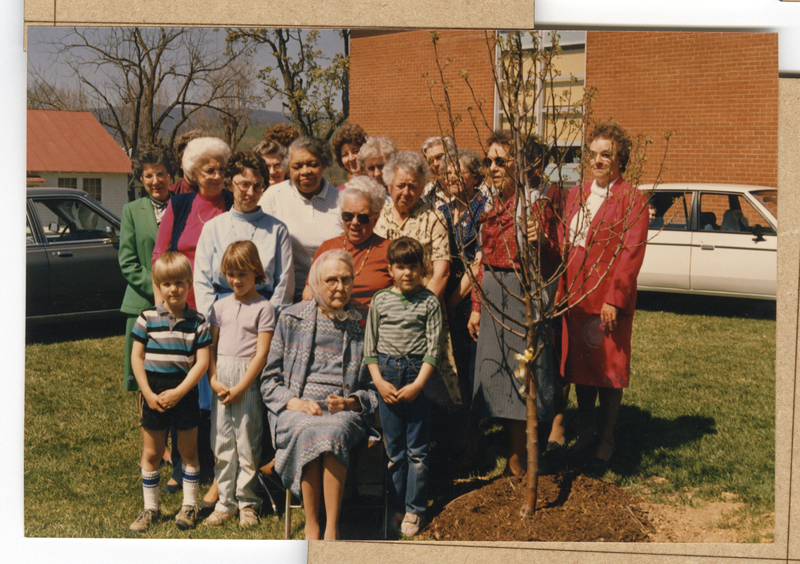
Mrs. Fairfax after Integration
Integration saw the closing of the Lucy F. Simms School in 1966. While many Black parents and students welcomed the new opportunities that integration would bring, the closing of the school was a tremendous loss. As Miss Awkard put it, "When the school closed it really killed the communitiy." The transition to the newly integrated Harrisonburg schools was especially difficult for students who had been so close to one another and so well-supported by their teachers at Simms.
Miss Awkard was one of very few Black teachers to be hired by the integrated school system. Shortly after her marriage to Jim Fairfax in 1966, she joined the teaching staff at Waterman Elementary, where she taught until her retirement in 1976. Initially met with indifference at Waterman, she quickly earned the respect and friendship of colleagues, students, and parents. She was also often called on as a role model for Black students, with whom she always insisted on one-on-one time to "draw more out of them." Even on those occasions she had to be strict, the now Mrs. Fairfax shared a special bond with her students, who often came back to visit her years after leaving her class. One former student brought his son to meet the woman who "took all his marbles," to which Mrs. Fairfax replied: "Cause you couldn't keep them in your pocket."
"I treat all children alike.... Children know who likes them and who doesn't.... Since I do, I'm not worried."
- Mary Awkard Fairfax on starting work at Waterman
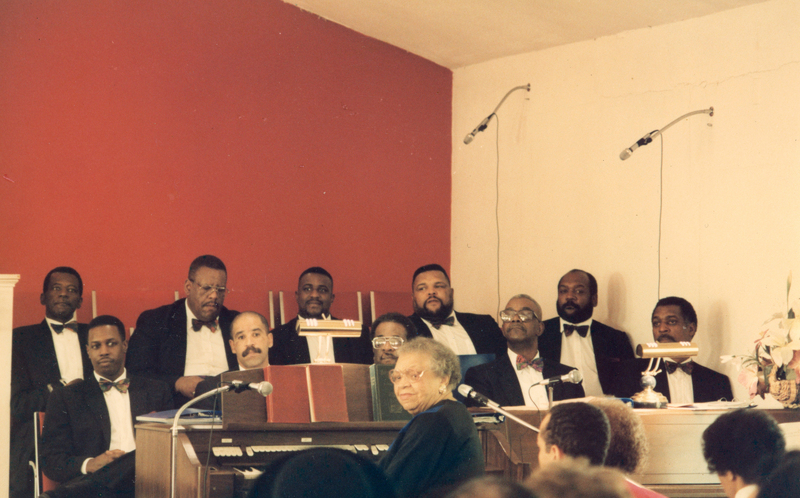
A Passion for Music
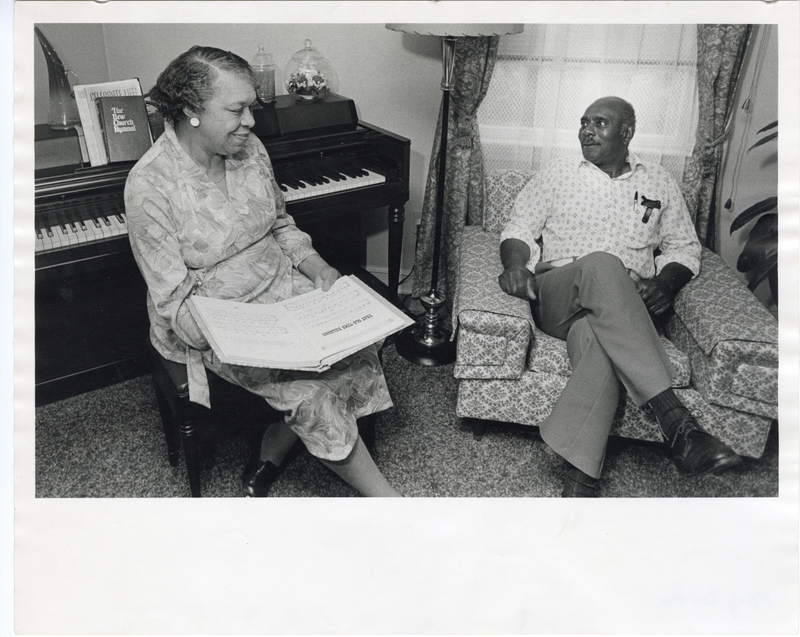
When Mrs. Fairfax began her new position at Waterman Elementary, she brought the Simms school piano with her. "We would have the best time with those children," she remembers, "because they didn't know music." Singing soon became a regular part of her students' days, and the sound of music ringing up and down the halls changed the atmosphere of the school. Mrs. Fairfax remembers how it would attract the attention of Principal O'Donnell, who would sometimes "come down from his office and stand outside and listen awhile."
Thanks to her mother, Mrs. Fairfax understood hwo music could create a loving and nurturing atmosphere -- a lesson she applied throughout her life. Just as she used her piano to transform the school spaces in which she worked, she brought her musical talents to places of worship throughout the region, playing for weddings and services and becoming the chief organist for the Harrisonburg First Baptist Church. "Everybody went to the church," she would later say. Where there were people, she would bring music.
"We'd tell them: if you don't want to sing, we're not going to make you sing.... but everybody wanted to."
-Mary Awkard Fairfax
Passing it on
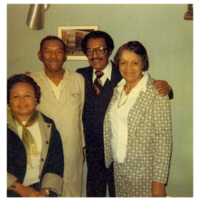
As well as being chief organist, Mrs. Fairfax served as Deaconess at the First Baptist Church. Her husband Jim Fairfax was the Head of the Deacon Board. The original church on the corner of Mason and East Wolfe was demolished in 1963 during "Urban Renewal." "They took our church," she remembered. "But we got enough money from that to build a new church on Broad Street," which eventually housed a daycare center, youth group, and choir. Joanne Gabbin remembers, "It was because of women like Mrs. Fairfax that I was a devoted member of First Baptist Church for many years, "[She] became my Harrisonburg grandmother."
As church historian, Mrs. Fairfax also published a history of the church on the original church's 112th anniversary in 1983. In this work, she joins other Northeast Neighborhood historians and memory keepers who have worked to preserve the history of their community. As Wilhelmina Johnson once told her children, "You should never forget your roots and where you came from. This is part of your history and always will be."
Educator, musician, historian, and community leader, Mary Awkard Fairfax inherited a legacy from Lucy F. Simms and left one behind just as powerful. Her talent, generosity, and commitment to strengthening the neighborhood that nurtured her serves as a model of excellence for generations to come. We celebrate her legacy here, in the very room that was once alive with her spirit and music.